


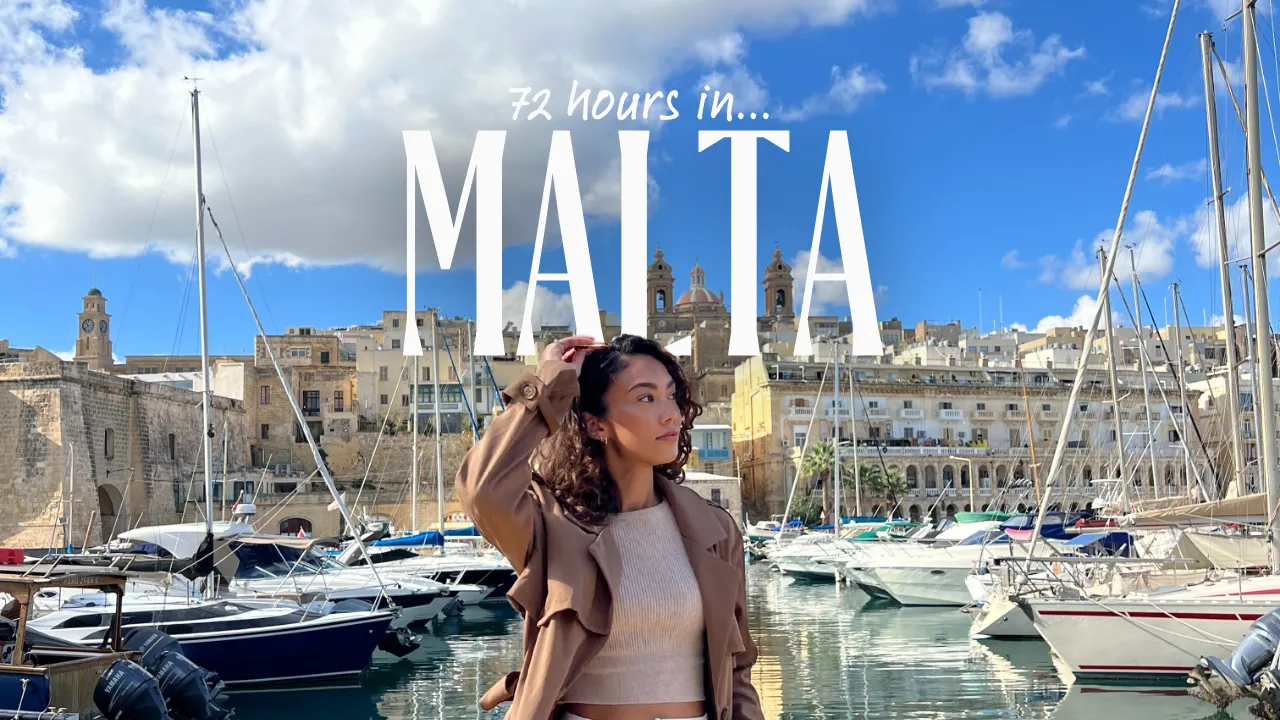
One of the smallest countries in the world, Malta is home to temples older than the Egyptian pyramids, a UNESCO-listed capital city, and some of the most beautiful water found across the Mediterranean. So don’t let it’s size fool you — this tiny nation packs a punch.
Malta is one of the most layered destinations in the Mediterranean. The small archipelago has been colonized and rebuilt by Phoenicians, Romans, Arabs, the Knights of St. John, the French, and the British, and you feel every one of them the moment you walk through Valletta’s fortified gates. Beachgoers and divers alike will love it here, with crystal-clear waters and famous shipwrecks like the Um El Faroud off the southern coast. It’s also just really easy to navigate: English is an official language, the buses are reliable, distances are short, and 300 days of sun a year means you’re not gambling on weather the way you are in most of Europe.
Malta sits comfortably in the mid-range for European travel — cheaper than Italy or France, roughly comparable to Portugal or Croatia. Budget travelers can get by on around $60-$90 a day for a hostel dorm, public buses, and street food, while mid-range travelers should budget around $110-$160 a day once you factor in a hotel room, sit-down meals, and activities. Pastizzi (little Maltese pastries sold at every bakery) are under $4 — learn where the closest pastizzeria is to your accommodation and you’ll spend less on breakfast than anywhere else in Europe.
Passport holders from the U.S. can enter Malta without a visa for up to 90 days. Two systems are now in effect that affect your border experience. The EU’s Entry/Exit System (EES) is active as of April 2026, replacing passport stamps with digital records of entry and exit. Expect to have your biometrics — a photo and fingerprints — collected at the border. ETIAS, an online pre-travel authorization similar to the ESTA, is also expected to launch in late 2026 for a fee of €20 and will be valid for three years across the Schengen zone. If you have any trips coming up in late 2026 or beyond, make sure to review the official ETIAS website for updates.
Malta runs on the euro (€), which it adopted in 2008. Credit cards are accepted at most hotels, restaurants, and shops — though smaller vendors and markets outside the main tourist areas often prefer cash, so it’s worth keeping some on hand. ATMs are easy to find in Valletta, Sliema, and throughout St. Julian’s. To save on transaction fees, I always recommend getting a Charles Schwab or Wise debit card before you go. My favorite and personal card is Schwab, because they automatically refund all ATM fees every month.
Malta has two official languages: Maltese and English, both recognized in its constitution since 1964. Maltese has Arabic roots but is written in the Latin alphabet, and has absorbed a large amount of English and Italian vocabulary over the centuries. English has been in use since British colonial rule took hold in the 1800s; by the time Malta gained independence, the language was so woven into schools and institutions that it stayed — so English speakers will have an easy time throughout the country. Italian also has deep roots in Malta. It was a co-official language until 1934, and over 60% of the population still speaks it conversationally.
Malta is very safe for solo female travelers. Violent crime is rare across the islands, and the capital Valletta, with its walled layout and active street life, is secure at night. Some street harassment does happen, especially in nightlife areas in St. Julian’s; this tends to come in the form of comments and unwanted attention rather than anything more threatening, but it’s worth knowing before you pick your base. Otherwise, standard precautions apply: keep an eye on your belongings, avoid isolated streets late at night, and plan how you’re getting back in the evenings. Bolt, Uber, and eCab are all widely available and used by travelers at night.
Tap water in Malta is technically safe by EU standards, but almost nobody drinks it because it tastes like a swimming pool — most of it is desalinated seawater, and it shows. Opt for bottled water, or consider investing in a reusable filtered bottle to solve the taste problem while cutting down on plastic.
Malta uses Type G outlets, the same as in the UK, at 230V and 50Hz. Travelers from the U.S. will need a plug adapter and, in some cases, a voltage converter. The good news is that most modern electronics — like laptops and cell phones — have dual-voltage chargers. As long as your charger brick reads “100–240V,” an adapter is all you need. I travel with this universal multi-plug adapter that works for most countries, including Malta.
Hair tools are the exception. Most U.S. hair dryers and straighteners are built for 120V, so plugging them into a 230V outlet will fry them. Voltage converters exist for this, but they have still been known to damage the devices or trip circuit breakers. I highly recommend investing in a dedicated dual-voltage travel hair dryer or straightener to cover you for Malta, and Europe in general.
Malta is a solid remote work base. It has strong internet speeds (around 141 Mbps average) and has 5G coverage island-wide. Coworking spaces in Sliema and St. Julian’s offer hot desks starting around €150/month. If you need to stay longer than the standard 90 day limit, Malta’s Nomad Residence Permit lets non-EU citizens live and work remotely for up to a year, renewable up to three times, with a €42,000/year income requirement and a €300 application fee. While the professional networking scene is smaller than in hotspots like Lisbon or Barcelona, the English-official environment and quality of life more than make up for it.
Detailed guides for Malta are on the way! I’m sharing all the practical tips, hidden spots, and budget advice you’ll need. Want first access when they go live?
No spam! Just honest travel tips, free destination guides, and stories from a Bronx girl on a mission to prove travel is for all of us.