At some point during your first month in Spain, you will stand in a government office holding the wrong photocopy at an appointment you waited weeks for, and you will think: What have I done?
It won’t be the first time you ask yourself that. Life as an English teacher in Spain has a way of raising the question on a regular basis — like when you’re stuck in line at the Oficina de Extranjería, three weeks into a new city that isn’t quite what you pictured. Or mid-lesson with a classroom full of kids who are sweet in theory but absolutely feral in practice.
The answer, for most people, is that it’s still something worth doing. But the road there and beyond will look different depending on the path you started on.
Key Takeaways on Life as an English Teacher in Spain
- ⏰ Work Schedule: Teaching English in Spain typically means 14–25 hours a week in the classroom.
- 📄 Initial Reality: Your first month in Spain is almost entirely paperwork. Housing, residency registration, and your TIE appointment will run your schedule before the job does.
- 🎒 Classroom Vibe: Spanish students are social, energetic, and not especially conditioned to sit quietly. Games and group activities work far better than a traditional classroom approach.
- 🌍 Overall Experience: How much you get out of the experience often comes down to your coworkers, your placement city, and how willing you are to build a life outside school hours.
There are multiple ways to become an English teacher in Spain: from language assistant programs and private tutoring, to charter and Catholic school placements. Each one comes with its own hours, its own pay, and its own version of what your life as an English teacher in Spain will actually look like day-to-day.
What follows is my version. Specifically as a language assistant through NALCAP, Spain’s North American Language and Culture Assistants Program, which placed me in a public primary school in Sevilla through the Ministry of Education.
Please know that this is just the general shape of what to expect, but it’s not the only shape these programs can take. With that disclaimer out of the way, keep on reading for an idea of what life as an English teacher in Spain is really like.
Is NALCAP right for you? Being a language assistant isn't the only way to teach abroad. Compare the best programs to teach English in Spain before you commit.
Your First Few Weeks
Less than eight hours after landing in Spain, I was already signing the lease to an apartment — all while running on two hours of sleep off a red-eye flight and having seen the place exactly once.
Would I recommend this to anyone else? Absolutely not. (I’ve got a whole guide on finding an apartment in Spain the slightly-less-unhinged way.) But I’m telling you this because it sets the tone for what life as an English teacher in Spain will feel like in those first few weeks: a little crazy, a little lucky, and eventually, you’ll realize things are just falling into place.
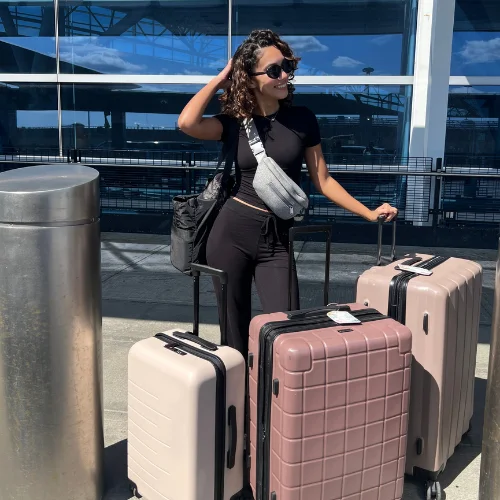
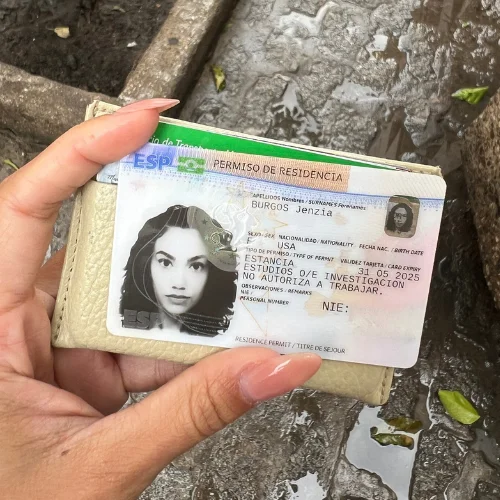
My move to Spain: from packing my life up into three suitcases to the residency card that made it all official.
Most language assistant placements run between September to June, and the first stretch of that feels a lot less like Eat, Pray, Love and more like an episode of Amazing Race, where the only prize for finishing each leg is another stamped piece of paper.
Once you’ve got housing sorted, you’re racing the clock on a few non-negotiables: empadronamiento at your local town hall to register your address, then your TIE appointment at your local Oficina de Extranjería, which you need within 30 days of arrival.
None of these offices move quickly, and none of them are interested in your sense of urgency. You learn quickly that “cita previa” (appointment required) runs your life for about a month, and that having a folder of photocopies on you at all times is just how you live now.
Most teachers arrive without housing. Budget for at least two weeks of short-term accommodation at an AirBnb, VRBO, or hotel while you apartment hunt.
Landing in Sevilla, Madrid, or Barcelona? Book your airport transfer in advance so you don't have to deal with taxis, directions, or logistics after a long flight.
Between all of those official appointments, you’re settling into a new city the same way you would anywhere else; just with extra steps.
You’ll open a local bank account, sign up for a phone plan, haul furniture from the nearest mueblería down cobblestone streets (because your apartment came with nothing but four bare walls and a lot of optimism), locate your nearest grocery store (and lament how they have none of the spices you use back home), and finally, introduce yourself to the neighbors, who tell you where to hang your clothes to dry (and suddenly, you realize you will be living without a dryer for the next several months.)
None of it is glamorous, but all of it is part of how a place goes from being somewhere you visit to somewhere you live.
📱 Stay connected on arrival: It can take some time to compare local phone plans, so I made sure I had service with an eSIM in the meantime. I use Saily whenever I'm in Spain, and you can get $5 off with my code JENZIA2371.
Settling Into the Job
Once the paperwork settles, the actual job comes into view. If you’re a language assistant, you’ll be teaching 14-16 hours a week, usually spread across 3-4 days, which means you’re looking at a pretty light schedule by American standards.
My commute was about 35 minutes by bus to a public primary school outside the city center. You don’t always get a say in your placement, so your commute is the one variable you can’t plan around in advance. Some teachers get walkable schools, some get an hour each way.
Regardless, your schedule will still buy you time. Long, unstructured time, which is not something most jobs hand you in your 20s or 30s (or 40s or 50s!)
After a 10 a.m. to 2 p.m. teaching block, your afternoon is just… open. You can take a Spanish class, plan a weekend trip, wander your neighborhood, or do absolutely nothing (hello, siesta!) which is its own kind of luxury when you’re used to a 9-to-5.
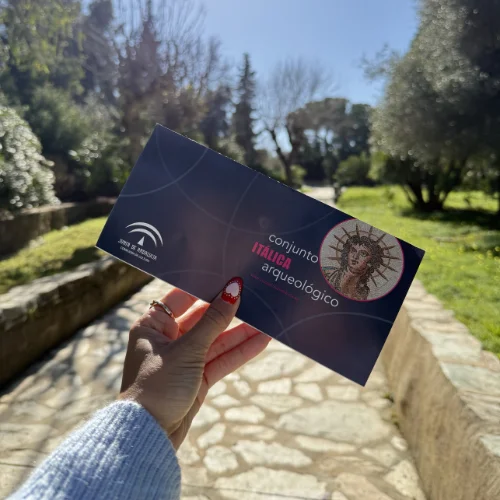
A palace courtyard one afternoon, Roman ruins the next. This is what “just a quick visit after class” looked like for me.
🎫 Ready to start planning those weekend trips? From southern cities like Córdoba to quick hops over to Portugal or even the Canary Islands, there’s a lot you can fit into a typical teaching schedule. I used GetYourGuide and Klook to plan all kinds of activities.
Doing the Job
The classroom side of things truly deserves its own conversation; from the students and the day-to-day dynamics, to what surprised me and what I wish I’d known going in.
Your role may differ if you’re going the private academy or charter school route. But in my experience as a language assistant, you’re not meant to be the lead teacher. Your role is to support the class, work with small groups, and bring English to life beyond a textbook.
In practice, this means a mix of guided conversation practice, vocabulary games, cultural activities, and occasionally reading aloud while 25 children decide whether or not they feel like paying attention today.
A typical morning might look like two 50-minute class periods, a short recess for café (for the teachers) and bocadillos (for the kids), then one or two more periods before the school day wraps at 2 p.m. Which grades you work with depends on your placement; some assistants rotate across the whole school, others stay with a specific level all year.
Not sure which route to take? NALCAP, private academies, and charter school programs come with different hours, pay, and responsibilities. This breakdown of the best programs to teach English in Spain can help you decide which is best for you.
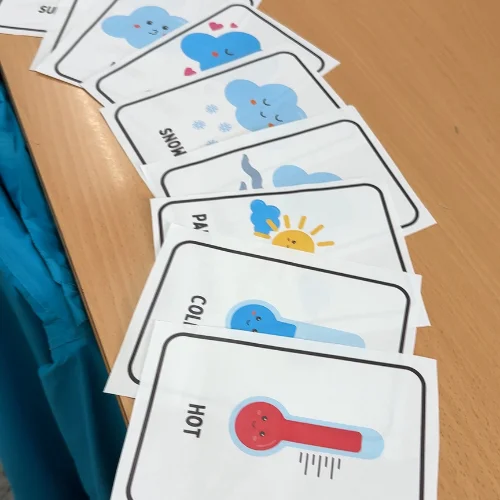
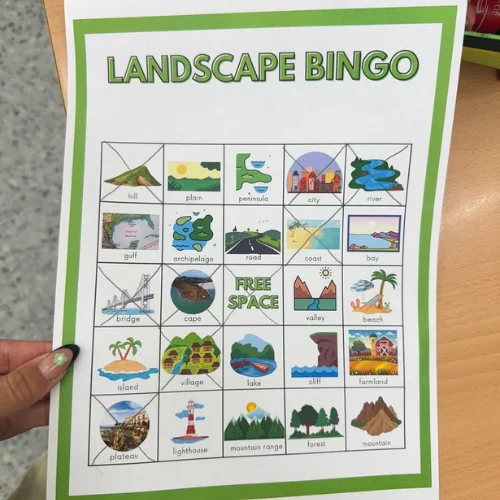
A peek into the classroom materials: flashcards, bingo sheets, and whatever it took to make vocabulary stick.
The classroom activities themselves are usually low-stakes and meant to be fun: vocabulary bingo, flashcard games, show-and-tell in English, simple worksheets, song-based lessons for the little ones, and holiday themed units around Halloween or Christmas.
In theory, you’re not meant to write lesson plans from scratch every week, and your cooperating teacher should handle the curriculum. Your job is to animate it. (Whether or not this actually happens in practice is another story.)
What I couldn’t fully anticipate was the energy in the room. Spanish kids are chatty. Which isn’t a direct complaint — their personalities are huge and often heartwarming — but if you’re used to American classrooms where kids have been socialized to sit quietly and raise their hands, the adjustment is real.
Classroom management here operates on a different frequency. Shushing doesn’t land the same way. Consequences are rarely doled out. The overall perception is that kids aren’t being disrespectful; they’re just being kids in a culture where being loud is not considered a flaw.
🎯 Make the Energy Work for You
Games, group activities, anything that feels like play — Spanish students respond to participation. Get them competing to answer first and you’ve basically done your job.
The good news: once you figure out how to get your students excited about what you’re doing, they’re all in. They will want to show off their English. They might even fight over who gets to answer first. The best thing you can do is make that energy work for you when you’re running a game or a group activity.
How much you enjoy the teaching itself often comes down to your placement school, the teachers you’re partnered with, and your coordinator.
I go much deeper into all of that — the teacher dynamics, your coordinator’s role, and my honest verdict following my experience — in Is NALCAP Worth It? But the short version here is this: you may not get to choose your placement or your co-workers, and how seriously they take your role can vary a lot.
Some teachers will treat you as a genuine partner in the classroom, while others may see you more as a prop. Both experiences are pretty common, and neither is a final reflection of whether your decision to teach English in Spain is worthwhile. It’s just part of the deal.
If you've already decided on NALCAP: Use my step-by-step guide to avoid the most common application mistakes. I walk you through the full timeline, required documents, and what to expect from the placement process.
Finding Your People
Community is big in Spain, but it may not automatically show up at your door.
If you’re living with other auxes, teachers, or Spanish roommates, you’ll have a built-in starting point. I lived alone, which meant I had to work a little harder for it. And I’m glad I did, because the process of actually finding your people in a foreign city is its own kind of reward.
The opportunities are there if you look for them. Facebook groups for expats in your city are worth joining before you even land. People post apartment listings, ask for recommendations, organize meetups, and occasionally just vent about bureaucratic processes in a way that makes you feel less alone.
Some of the best parts of living abroad were the nights like these with friends.
Language exchanges (intercambios) are another good one: you practice Spanish, a local practices English, and if the chemistry is right you end up with a new friend instead of just a conversation partner.
There are also trivia nights at bars, WhatsApp groups for language assistants and teachers in your region, community events through your school — all of it is worth showing up to at least once, because you can’t predict where your people are going to come from.
If you’re an introvert, the flip side of all this is that Spain is a wonderful place to be alone. I took myself on solo lunches and solo dinners and solo weekend trips, and it never once felt depressing.
If you’re someone who’s worried that going alone would mean being lonely, I’d push back on that. You’ll have moments of homesickness — everyone does — but you’ll also have afternoons in a plaza with a glass of wine, a book, and absolutely nowhere to be, and those will end up being some of the moments you remember most.
💃🏽 Put Yourself Out There
Join Facebook groups for your city, WhatsApp groups for teachers and language assistants in your region, intercambios, and trivia nights. You just have to show up!
Life Outside the Classroom
On most teaching schedules, you’ll have more free time than you’ve probably had since college, and Spain is an almost offensively good place to make the most of it.
A random weekday with no afternoon classes can look like this: ordering the menú del día for a three-course lunch under €15, followed by a free visit to a museum or palace or royal garden because you have a resident card now, and, hey, this is just your life now.
You can walk home a different way than you came. You can sit in a plaza. You can people watch without feeling like you’re wasting time, because in Spain, sitting in a plaza isn’t a waste of time. It’s just what you do on any given Tuesday.
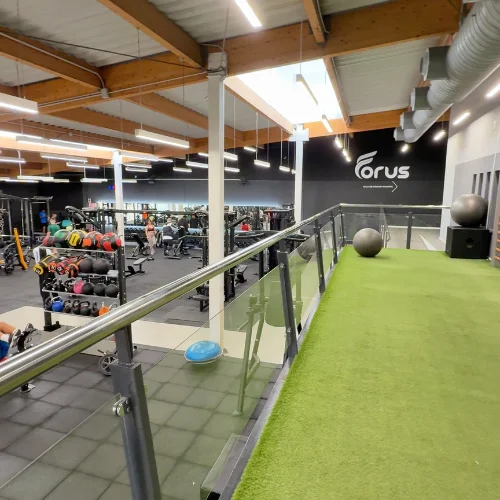
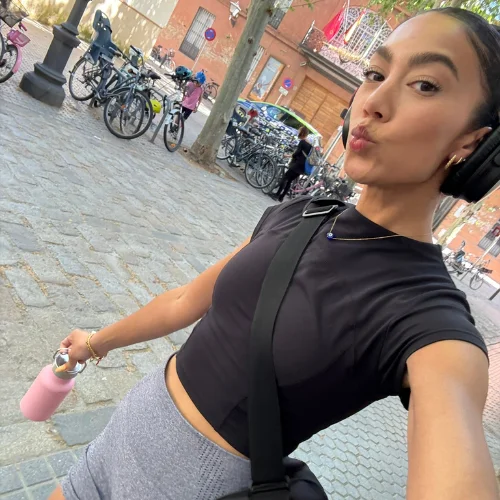
A glimpse at my weekly routine. Leg day at the gym followed by a walk home on cobblestone streets.
Life as an English teacher in Spain also put me in the best shape I’ve ever been in, which I didn’t see coming (I was eating my weight in tapas, after all). Besides all the walking around, I had a gym membership at a place nicer than anything I could afford back home — and I actually used it, since I had the time and energy and nowhere urgent to be afterward.
Other habits looked different for me in Spain, too. I normally hate cooking, but you wouldn’t know that from my time in Sevilla. There was a fresh market around the block from my apartment, and something about picking out your produce from an actual farmer made the whole thing feel a lot less like a chore, and more like a privilege worth honoring.

Frequently Asked Questions
Do I need to speak Spanish to teach English in Spain?
Technically, no. Most programs, including NALCAP, hire you for your English, and your role doesn’t require you to instruct in Spanish. That said, basic Spanish helps a ton with the logistics of daily life: whether navigating bureaucracy, talking to landlords, or ordering at a restaurant.
What qualifications do I need to teach English in Spain?
It depends on the route. Language assistant programs like NALCAP generally require that you’re a native or native-like English speaker and a current student or recent graduate; no teaching degree or TEFL certification required.
Private academies and international schools typically expect a TEFL/CELTA certificate at minimum, and some roles require a full teaching credential. If you’re planning to teach long-term or want more job flexibility, getting TEFL-certified before you go is worth it.
How much do English teachers in Spain make?
It varies a lot by role. Language assistants earn a monthly stipend of €800 to €1,000, which covers basics in a mid-size Spanish city but doesn’t give you a lot of room to save.
Private academy teachers and certified instructors at international schools earn more, with private and international schools on the higher end. Cost of living in Spain is lower than in most U.S. cities, which helps the numbers stretch a bit further. You can find a full breakdown of teaching salaries in my post comparing different programs to teach English in Spain.
What is a typical day like as an English teacher in Spain?
For language assistants, most teaching happens in morning blocks — usually between 9 a.m. and 2 p.m., with a break mid-morning. You’ll rotate through classes and run activities alongside the lead teacher. Afternoons are almost always free.
Private academy teachers often work split shifts instead: a morning block, a break in the afternoon, and/or evening classes when Spanish adults are off work.
Can you travel a lot while teaching English in Spain?
Yes, and this is one of the best parts of the experience. Short teaching hours, long weekends, and Spain’s position in Europe makes weekend travel easy and more affordable. Most teachers leave for a trip every few weeks; whether that’s exploring a different region of Spain or catching a budget flight somewhere else entirely.
One Last Thing Before You Go
For all the logistics I’m skimming past here (like how to actually become an English teacher in Spain and the NALCAP application process,) I’ve written full guides on each.
But for now, I’ll leave you with this picture of your first year teaching English in Spain: It opens with a sprint through bureaucracy, settles into a schedule with more breathing room than you’re probably used to, and somewhere in the middle of it all, you’ll stop counting the days and just start enjoying them.
When it's time to book that flight: Set a price alert ahead of time and keep an eye on fares; that's how I found mine for under $500! Search flights to Spain here.
Ready to
Move to Spain?
Check Out These Resources
Book your flight: I always start with Skyscanner to to find the cheapest window to fly. Since you’re moving, make sure to double check baggage allowances — you’ll have more luggage compared to a regular vacation!
Get covered before you land: I’ve had to use travel insurance more than once, and it saved me thousands each time. SafetyWing covers long-term stays, which matters while you wait on Spanish health insurance.
Book a short-term place to stay: Do not sign a lease before you land. Booking.com is where I booked my first stay in Sevilla while I searched for an apartment in person.
Explore once you’re settled: Once the paperwork is done, GetYourGuide is my go-to for exploring your new city and region. They partner with local operators, which matters to me when booking.
Stay connected when you land: Download Saily before your flight so you have data the moment you touch down. You can use code JENZIA2371 for $5 off your first plan.
Pack to move, not vacation: A move-specific packing guide is coming soon, but my travel essentials page covers the bare minimum essentials that made it with me to Spain.

Save to Pinterest 📌