


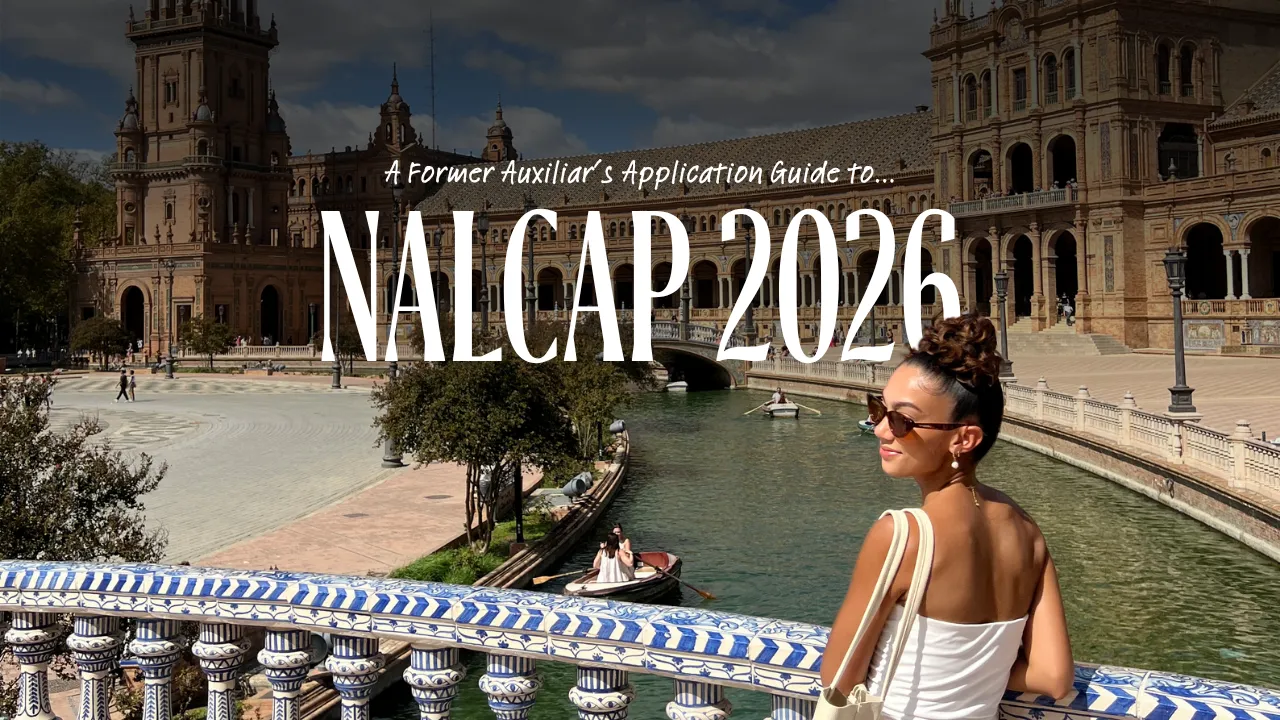
Spain’s Ministry of Education finally opened NALCAP applications for the 2026–2027 school year on May 15, 2026. After months of uncertainty, program cancellations in two major regions, and a multi-million euro government fine that rocked the auxiliar community, the application window is now set: June 2–30, 2026.
If you’ve been watching this program’s implosion from the sidelines and feel super confused about the process, I get it. I did NALCAP myself in Sevilla, so I’m going to be honest with you about both the opportunity and the chaos of it all. This post walks you through the NALCAP 2026 application process step by step, and covers what’s actually been happening with the program so you can make an informed decision.
Key Takeaways for NALCAP 2026
- 📅 Application Window: NALCAP’s 2026–2027 application window runs from June 2–30, 2026.
- 🧑🏫 Program Overview: The program places 4,000+ North American participants annually in public schools across Spain for 14–16 hours of work per week.
- ⚠️ Regional Update: Andalucía was cancelled in 2025–2026 after a €5 million government fine and will not be participating in the program in 2026. Galicia, Murcia, and Madrid are also absent from this year’s application portal.
- 💸 Financial Prep: Build a savings cushion of at least 3 months of expenses (~$6,000) before you go. Payment delays are real, common, and I can’t warn you enough!
- 🎂 Age Limit Change: The age limit has been lowered to 45 for new applicants as of January 1, 2027.
What Is NALCAP & Is It Still Worth It in 2026?
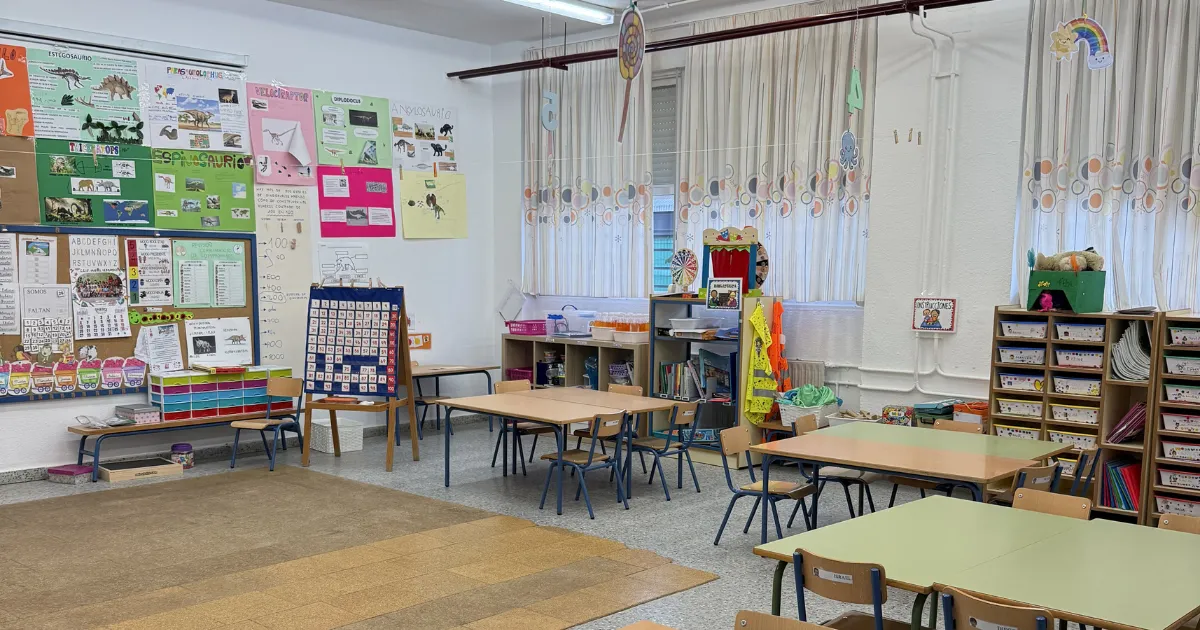
NALCAP (North American Language and Culture Assistants Program) is a Spanish government initiative that places native English speakers in public schools across Spain as Auxiliares de Conversación — in other words, teaching assistants. You work 14-16 hours a week supporting local teachers in the classroom, earn a monthly stipend of €800–€1,000 depending on region, and get private health insurance included.
Each cycle, the program brings in around 4,000 to 6,000 North American participants. The appeal is pretty clear: NALCAP is a legal pathway to live in Spain as a non-EU citizen, giving you enough free time to actually explore the country, with a built-in community of people doing the same thing. For someone who’s never had a roadmap for living abroad, it’s one of the most accessible entry points that exists.
But in 2025 and into 2026, the program hit serious turbulence. Legal challenges, regional withdrawals, and months of silence from the Ministry left thousands of applicants in limbo. Somehow, the program survived, and it’s moving forward for 2026–2027. While it’s still a program worth pursuing, you’ll want to go in clear-eyed about what you’re signing up for.
Who Is Eligible for NALCAP 2026-2027?
Eligibility is pretty straightforward, but there’s one new restriction for NALCAP 2026-2027 that didn’t exist before. Here is the full list of requirements, per the official Spanish Ministry of Education listing (updated May 2026):
- Be a U.S. citizen with a passport valid through November 1, 2027
- Have a conferred college degree OR be currently enrolled as a sophomore or above at an accredited U.S. or Canadian university (studies must have been completed in English)
- Be a native or native-level English speaker
- Have a clean background check
- Be in good physical and mental health
- Be aged 18 – 45. You must be at least 18 years old as of January 1, 2026 and not be 45 or older on January 1, 2027.
That last point is new for the NALCAP 2026 cohort. If you’re a new applicant aged 45 or over on January 1, 2027, you are no longer eligible (previously, the cap was 60). Only renewing candidates may apply up to age 60, unless their assigned region sets a stricter limit. Canadian citizens are also eligible to apply but may have additional documentation requirements, so confirm on the official portal for Canada before applying.
Important Age Note 🔞
The new age cap to participate in NALCAP is 45 as of January 1, 2027. This is a change from the previous 18–60 age range.
How Do You Apply for NALCAP in 2026?
The entire NALCAP 2026 application runs through the PROFEX 2 portal, Spain’s online system for the Auxiliares de Conversación program. Applications are processed on a first-come, first-served basis, so your application number directly determines how much regional choice you have. Apply the first day the window opens.
- Application window: June 2–30, 2026
- Program dates: November 1, 2026 – May 21, 2027 (Madrid ends June 30, 2027)
That’s a roughly four-month runway from when applications close to when you land in Spain. In a normal year, this process runs from February through October. You don’t have that cushion. Read through the entire timeline below before you do anything else.
Your 2026 NALCAP Timeline
This is my recommended schedule for the condensed NALCAP 2026–2027 cycle, built around the realities of the compressed window. You’re going to want to start your visa paperwork immediately upon applying — the apostilled background check alone can take several weeks, leaving almost no room for delays.
What to Do ASAP
- Check your passport. It must be valid through at least November 1, 2027. If yours expires before that, renewing takes 6–8 weeks minimum.
- Register your PROFEX 2 account now. Go to sede.educacion.gob.es, click “Buscar Trámites,” search “Profex 2,” click “Regístrese,” and register under “Registro de persona física.” Your passport number becomes your username. You can’t change it later, so make sure your passport details are the exact ones you’ll travel on.
- Build your PROFEX 2 profile completely: personal information, CV, teaching experience, language skills, certifications. The profile should be 100% ready before June 2 so all you’re doing on opening day is submitting.
- Draft your statement of purpose. It’s 250–300 words, written in English, addressed to Spain’s Ministry of Education, signed and dated by you. State that you are a native-level English speaker and explain why you want to participate. Get this done and sitting in a folder ready to upload.
- Request your official transcripts or copy of your diploma. If you graduated recently and haven’t ordered an official copy yet, request it from your university’s registrar now. Processing takes 1–3 weeks at most institutions.
- Request your letter of recommendation. Ideally, give your recommender at least two-three weeks to get this done.
- Identify your regional Spanish consulate. Your consulate assignment is based on where you live, not where you’re from. Find yours at the Embassy of Spain’s consulate locator. Important Note: you won’t actually submit your visa at the consulate itself. Spain has contracted a company called BLS International to handle all NALCAP visa applications in the U.S. We’ll get into the full BLS process below, but know now that your assigned consulate still determines which BLS center you use, so identifying it early helps.
- Get ahead of your FBI background check now. This is a visa requirement, and the apostille process alone can take weeks depending on current wait times at the U.S. Department of State. More on this process below.
Early June — Apply & Gather Your Documents
This year, the application window is only open for 28 days. Apply ASAP. These are the documents you’ll need to upload directly to your PROFEX 2 profile. All scans must be in PDF format:
- Scanned main page of your valid U.S. passport
- Official college transcript or diploma copy (if your name on the diploma doesn’t match your current legal name, upload proof of name change)
- Statement of purpose (250–300 words, signed and dated)
- Letter of recommendation from a professor or employer
- Statutory Declaration of Health Status — introduced in 2025, required for 2026–2027. Download the form from the Ministry’s website, read it, fill it out yourself, print it, sign it, and scan it as a PDF. This is a self-declaration, not the doctor’s letter you’ll need for your visa application later. Upload it to “My Profile” → “Attached Documents” in PROFEX 2.
During the application, you’ll rank your top three region preferences and indicate whether you prefer a rural village, small town, small city, or large city. These preferences may or may not be honored. Lower application numbers get first pick. The confirmed participating regions for 2026–2027 are Aragón, Canarias, Cantabria, Castilla-La Mancha, Cataluña, Castilla y León, Islas Baleares, Navarra, País Vasco, Asturias, Ceuta, Extremadura, La Rioja, and Melilla. Andalucía, Galicia, Murcia, and Madrid are all absent from this year’s cycle. Valencia is technically participating, but the region is only offering a limited number of cupo ministerio positions at €800/month rather than the standard €1,000, so don’t list it as a top preference unless you’re prepared for that tradeoff this year.
Don't Crash Out 🌐
The PROFEX 2 portal crashes every year on day one — don’t panic. The portal works best on Chrome or Edge. Clear your cache if you hit issues. Register your account before June 2, build your profile completely in advance, and be ready when the window opens.
Background Check & Apostille Process
The moment you submit your application, your next job is the background check. Given this year’s condensed timeline, don’t wait for a placement email — start now.
The background check is a visa requirement, it has the longest lead time of anything in this process. It needs to be apostilled (officially authenticated for international use) and translated into Spanish before your visa appointment. Most consulates require it dated within 90 days of your appointment.
How to Get Your Apostilled FBI Background Check
- Step 1. Go to the FBI’s Identity History Summary page (edo.cjis.gov) and complete the steps for ‘Obtaining Your Identity History.’ You’ll receive an email with a link and a PIN. Don’t lose that email — you’ll need it throughout the process.
- Step 2. Using the link and PIN, fill out the background check request form and pay the $18 fee online.
- Step 3. You’ll receive a confirmation email with your order number and a link to find your nearest live fingerprint scan location. Pre-register with the fingerprint location before you go — the FBI email includes a link to do this.
- Step 4. Go get your fingerprints taken in person at the designated USPS location. Bring your order number. The scan costs around $50. Important: not all USPS locations are equipped with Live Scan terminals, so you can’t just walk into any post office. Use the FBI’s locator tool (linked in the Step 3 confirmation email) to find a participating branch near you. You’ll get an email immediately confirming your prints were received.
- Step 5. About an hour later, you’ll get another email saying your results are ready. Log back in with your original link and PIN and download the PDF.
- Step 6. Print every page of the PDF. This printed version is just as official as the mailed copy.
- Step 7. Go to the federal Office of Authentications website (state.gov) and follow the instructions to request the apostille. Fill out the DS-4194 form — in Section 4 where it asks for “Country,” write Spain. You can prepare this form before getting your fingerprints taken so you’re ready to mail everything out the day results arrive.
- Step 8. Mail your printed background check to the following address: U.S. Department of State’s Office of Authentications, 44132 Mercure Circle, P.O. Box 1206 Sterling, VA 20166-1206. Your packet should include the completed DS-4194 apostille request form, a $20 check or money order payable to “U.S. Department of State,” along with a brief letter with your name, document type, destination country, and contact information. Lastly, you must include a prepaid USPS or UPS return envelope. This is what they will use to send back your apostilled background check. I recommend using tracked mail both ways. Mail-in processing is currently 4+ weeks from receipt — check current wait times on the Office of Authentications website before you send.
- Step 9. Your apostilled background check will arrive in the mail with the apostille certificate stapled on top. Do not remove that staple. It authenticates the two documents as a single unit. Pull it out and you’ll have to start the whole process over at your own expense!

Translating Your Documents
Once your apostilled background check is in hand, you will need a sworn Spanish translation of the documents before your visa appointment. Check whether your consulate requires a physical original or will accept a printed electronic version (most accept printed electronic, but worth confirming).
Start reaching out to sworn translators after you submit your application, ideally before your apostilled check even arrives. That way you can send a copy of the background check and apostille the day they arrive.
In 2024, I used Daniel Rider at traduccionesrider@gmail.com. He charged $40 back then, and had the translation back to me within 48 hours. Fast, affordable, no hassle — I’d recommend him without hesitation.
Scheduling Your Doctor’s Appointment
While you’re waiting on all of this documentation, schedule your doctor’s appointment for late June or early July. As part of your visa application, you’ll need a medical certificate from an MD (most consulates don’t accept a DO) confirming you’re in good health. This is the template I used from my BLS office in New York City, but check your respective BLS office for their instructions. It must be dated within 90 days of your BLS appointment, so timing matters. As of May 20, 2025, this is required for all student visa applicants regardless of stay length.
July through August — Watch for Placement Emails
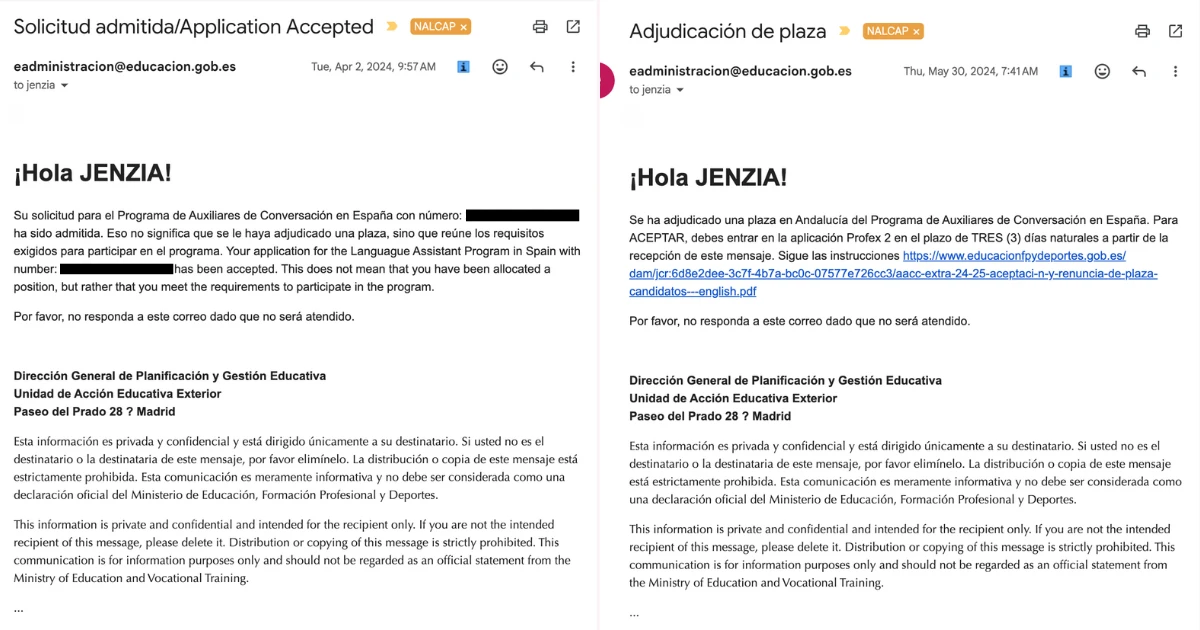
After submitting your application and beginning the background check process, watch out for two emails. The first, the Solicitud Admitida, arrives roughly two to three weeks after submission. It confirms you meet the requirements, not that you have a placement.
The one you’re actually waiting for is the Adjudicación de Plaza — your regional placement email. In a normal year this arrives in April or May. In 2026, expect it in late July, or possibly as late as August. Traditionally, you only have three business days to accept your placement in PROFEX 2 or you forfeit your spot entirely. So, make sure you set email alerts and check your inbox religiously for emails from eadministracion@educacion.es. Once you accept, an Aceptación de Plaza confirmation arrives the same day, usually within minutes.
Your placement email confirms your region only — not your city, school, or grade level.
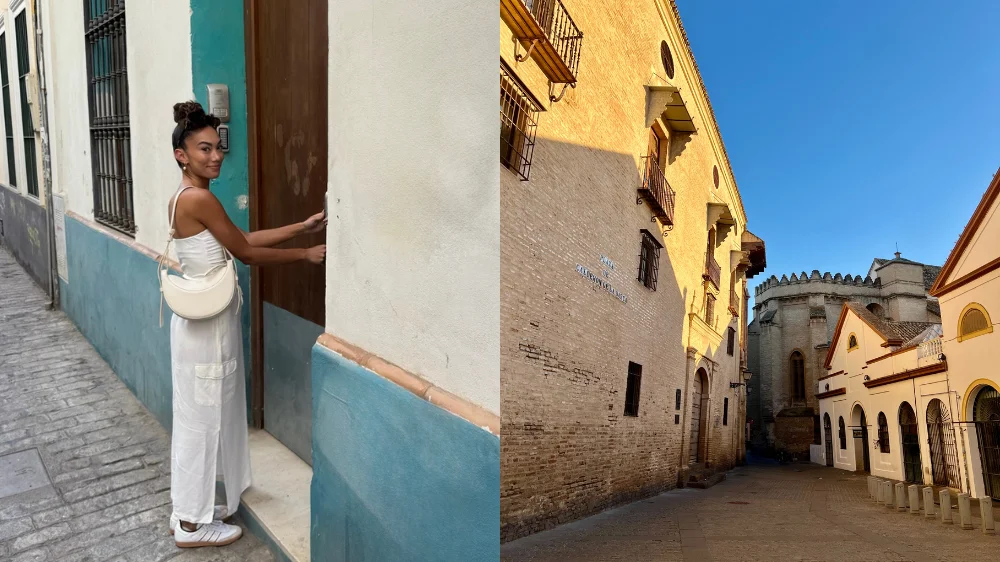
In 2024, my inscrita number was 1816 and I still received my first-choice placement of Andalucía. In Andalucía, participants could actually select their own school and city rather than being assigned one. I chose a school in a suburb just outside Sevilla, about a 40-minute bus ride from Macarena, the neighborhood where I lived. It’s unclear which, if any, regions will embrace the same process for the 2026-2027 cycle, so wait for instructions on how your specific region handles school assignments once you’re in.
How Do You Get Your Carta de Nombramiento?
The Carta de Nombramiento is your official appointment letter from the Spanish Ministry. It contains your specific school, city, grade level, start date, hours, stipend, and school contact. You need it in hand before you can submit your visa application at BLS, but you can book your appointment before it arrives, as long as you’re strategic about timing (more on that below).
In past cycles, getting your Carta required logging into a regional portal, clicking through a series of checkboxes, and checking back daily until it showed up. According to the official program documentation for 2026–2027, the Ministry now communicates your name directly to the regional education office, which processes the letter and sends it to the email address you provided on your application. That said, timing still varies by region and there’s no guaranteed window — in the past, it could take around a month to arrive after receiving Plaza Aceptada status in PROFEX.
A few things to do as soon as you accept your placement: make sure the email on your PROFEX 2 account is one you check constantly and isn’t routing Spanish government emails to spam. Then, save your Carta the moment it arrives. Download it, back it up, keep a copy somewhere accessible — you’ll need it for your BLS appointment, for your school, and for your TIE (residency card) appointment once you’re in Spain. In the 2026 compressed timeline, expect your Carta by August. This is the tightest pinch point of the whole process.
August through September — Submit Your Visa
Book Your BLS Appointment
BLS International handles all NALCAP visa applications in the U.S. Most BLS offices recommend submitting your visa application at least two months before your program start date. Given that processing takes 3–6 weeks, a late August or early September appointment is your ideal target.
Book at usa.blsspainvisa.com, select your city, and choose the NALCAP national visa category specifically, not the general student visa.
You can, and should, book your BLS appointment before your Carta arrives. Appointments fill up, and in a compressed year you cannot afford to wait. The key is to set a reminder one week before the appointment date so you can cancel or reschedule if your Carta still hasn’t come through by then. Most BLS centers allow cancellation without penalty if you give enough notice. You need the Carta to actually submit the application, but you don’t need it to hold the appointment slot.
How Much Does the NALCAP Visa Cost?
Be prepared to pay a visa fee, which is currently $160 for Americans, made out to the Consulate General of Spain by money order. There is also a BLS service fee of $20, paid separately in cash or by debit card at the BLS office.
Visa Appointment Checklist
Here’s a general overview of what you’ll bring to your appointment (check your respective BLS office for a confirmed list, as requirements vary by location):
- Apostilled FBI background check + sworn Spanish translation
- Carta de Nombramiento
- Medical certificate from an MD (remember that doctor’s appointment I told you to schedule? Make sure you have this form ready!)
- Two recent passport-style photos
- Valid passport + copy, second photo ID + copy
- Printed flight itinerary (book something refundable or changeable)
- Completed visa application form + a copy
- Visa fee money order ($160 USD)
- BLS service fee in cash or debit ($20 USD)
Make at least two copies of everything before you walk in. BLS keeps originals you won’t get back. Once you’re in Spain, you’ll need your background check for your school and your Carta for your TIE (residency card) appointment.
Once you submit, BLS holds your passport for 3–6 weeks during processing. During this time, you cannot travel internationally. If you need to fly domestically, you’ll need a Real ID. When your visa is ready, the pickup is typically done in person at BLS.
September through October — Pre-Departure Prep
When your visa arrives, check your name and dates immediately. Any errors need to be corrected before you board a plane. If you booked a dummy flight for your visa appointment, book your official flights or change dates on your original itinerary accordingly.
Reach Out to Your School
Contact your school using the information on your Carta. Introduce yourself and confirm your start date. No need to do this before September; the school year starts in September and most people are on vacation through August, so earlier emails will likely go unanswered.
Finding Housing in Spain
One of the cons of NALCAP is that the program does not provide support in arranging accommodation. Idealista, Fotocasa, and the program’s Facebook groups are your best resources for finding an apartment and roommates. Your school contact may also be able to point you toward local housing options once you’re in touch (mine wasn’t much help on that front, but it’s worth asking).
One strong piece of advice: do not sign a lease or any rental contract before seeing the apartment in person. Rental scams targeting incoming auxiliares are common, and photos lie. Before you leave the U.S., book an Airbnb or hostel for your first one to two weeks instead. It gives you a base to land in, time to explore neighborhoods, and the ability to visit apartments before committing to anything.
That said, you can (and should) start doing your research before you land. I spent time in the weeks before my flight saving listings and setting up viewing appointments with landlords in advance. I got extremely lucky and signed a lease within 24 hours of arriving in Sevilla. That is not a typical outcome, but it’s possible when you do the prep work. Going in with a shortlist and scheduled viewings is a very different situation than landing with nothing lined up.
November 1 — Program begins
If you’ve made it this far, congratulations! The weeks of waiting, paperwork, and planning are all behind you now. What’s ahead is the stuff that people write home about. I remember landing in Sevilla and suddenly knowing the bureaucracy was worth every headache. Your version of that moment is coming. Go find it!
What's Been Happening with NALCAP?
Now you know how to apply to NALCAP and have the full timeline. But before you spend hours on your application, you deserve to know what you’re signing up for. If you’re uninterested in the legal saga, feel free to jump ahead to the full list of NALCAP resources (though I highly recommend coming back to this section later so you’re fully informed).
In July 2025, Spain’s Labour Inspectorate imposed a €5 million sanction on Andalucía’s regional government for failing to register foreign language assistants in the Social Security system, as reported by The Olive Press, an English-language newspaper in Spain. The fine included €4 million for immigration irregularities and nearly €1 million in unpaid Social Security contributions.
The underlying issue is thorny: legally speaking, auxiliares have always been classified as students receiving a living stipend, not as employees. NALCAP participants historically reported their Spanish income as a scholarship or grant for U.S. tax purposes. But after a government investigation that included direct interviews with auxiliares in Andalucía, officials determined that participants were functionally performing employee-level responsibilities and should have been registered accordingly.
As a result, Andalucía cancelled all NALCAP placements for the 2025–2026 academic year. Participants who had been expecting Sevilla, Málaga, or Granada placements were either relocated or left without a placement entirely. Andalucía historically represented the majority of all NALCAP placements after the Community of Madrid, making this a significant blow to the program’s footprint.
NALCAP's Legal Troubles 🚩
Auxiliares are classified as students for visa purposes, but Spanish authorities argue the role may require employee status and Social Security contributions. This legal uncertainty led to fines and temporary program suspensions in multiple regions.
But the problem didn’t stop there. The same legal logic applies to every other region in Spain, with auxiliaries (mis)classified the same way. In early 2026, Valencia received a similar fine and officially announced its withdrawal from the auxiliar program until coordination issues are resolved, with investigations still ongoing in other regions.
The Ministry’s silence throughout early 2026 was unusual and rattled would-be applicants. Applications for the 2026–2027 cycle didn’t open on the normal January–April timeline. CIEE and Conversa, two of the main partner organizations, cancelled their Fall 2026 intakes entirely.
Then, on May 15, 2026, the Ministry announced the condensed June 2–30 window. The program is moving forward, at least in some form. Which regions are participating in 2026–2027 remains unconfirmed at time of publication.

The Late Pay Problem
Everyone in the auxiliar community warns you about late payments. I’m warning you again.
In 2024, I started my NALCAP placement in Andalucía in October. I did not receive my first stipend payment until the very end of December. That’s almost three months of living expenses out of pocket in a city I’d just arrived in, navigating a new bank account, a new apartment, and a new country where the bureaucracy is famously resistant to urgency. And I know people who waited even longer.
This is not a rare experience. You’re going to want to bring enough savings to cover at least three months of expenses before your first payment lands. Many who’ve done the program recommend a minimum of $6,000 before you board that flight.
Payment delays happen for a few reasons. Your school has to submit regional paperwork confirming your arrival and hours. Regional government offices are not known for speed. And in regions simultaneously fielding legal investigations, institutional delays compound.
The stipend itself, once it arrives, is tax-free in Spain (though you’re still obligated to report and potentially pay taxes on it in the U.S., so consult a tax professional). It’s just enough to cover basic rent (likely with roommates), groceries, and utilities in most Spanish cities. What it doesn’t cover is the upfront cost of arrival: first and last month’s rent, a phone plan, transportation, and the general expense of setting up a life abroad from scratch.
Save Before You Go 💰
Late payments are one of the most consistent experiences across NALCAP cohorts. I went nearly three months without a paycheck my first year. Bring a minimum of $6,000 and treat it as a non-negotiable, not just a cushion.
There’s a throughline connecting these payment delays, the social security fine, and the overall instability of the program: the classification problem. Again, auxiliares are legally classified as students, which is why the stipend is tax-free in Spain and why there’s no formal employer-employee payroll infrastructure. But you’re showing up to a school four days a week and performing recognizable work. The result is a gray zone where payments route through regional governments via mechanisms that don’t have the accountability of a payroll system. Nobody’s fighting to fix it because the classification is also what makes the visa possible. But it’s a real cost that falls almost entirely on the assistant.
Frequently Asked Questions
Is NALCAP cancelled for 2026-2027?
No. On May 15, 2026, Spain’s Ministry of Education announced the 2026–2027 application window: June 2–30, 2026. Program dates run November 1, 2026 – May 21, 2027. Andalucía, Galicia, Murcia, and Madrid will not be participating in the program this year.
What is the NALCAP stipend in 2026?
NALCAP stipends range from €800 to €1,000 per month depending on which region you’re placed in, according to the Spanish Ministry of Education. Madrid and major cities sit at the higher end. The stipend is considered a living allowance, not a salary, and is tax-free in Spain. I recommend having a minimum of $6,000 in savings before departure to cover arrival costs and potential payment delays.
Can I apply to Andalucía in 2026?
As of June 2026, Andalucía is not participating in the 2026–2027 NALCAP cycle. The region was cancelled in 2025–2026 after a €5 million Labour Inspectorate fine for failing to register assistants in Spain’s Social Security system, and it does not appear on the confirmed regional list for the upcoming year.
How long does it take to get paid in NALCAP?
Your first payment can arrive 4–8 weeks after your start date, though many participants wait significantly longer depending on region. I recommend having savings to cover at least three full months of expenses before your first stipend lands.
Do I need to speak Spanish to do NALCAP?
Technically, no. Fluency is not a program requirement, and NALCAP participants work as English-language assistants supporting Spanish teachers in the classroom. But I can’t, in good conscience, say you don’t need to speak Spanish to do NALCAP.
NALCAP offers very little logistical support once you’re on the ground. You’re navigating a foreign bureaucracy, setting up a bank account, finding housing, registering for your TIE, communicating with school administration, and building a life in a country where English is not widely spoken outside major tourist areas. Going in without at least an intermediate level of Spanish makes all of that significantly harder.
You don’t need to be fluent, but I’d strongly recommend arriving with at least a conversational foundation, or a serious commitment to enrolling in a language school part-time once you get there. The program won’t hold your hand, but your Spanish will.
Your Alternatives If NALCAP Doesn't Work Out
Given the uncertainty around 2026–2027, it’s worth knowing your options. None of them are identical to NALCAP, but each offers a legitimate way to live and work in Spain.
- Meddeas: A private program that places English-speaking assistants in Spanish schools, often with more placement support than NALCAP provides. Generally available even in regions where NALCAP isn’t.
- BEDA (Bilingual English Development & Assessment): A private program run through the Catholic Schools of Madrid that places native English-speaking assistants in private and semi-private Catholic schools across Spain. Open to applicants of any nationality, as long as you have a native level of spoken English and there’s no maximum age limit. It’s worth noting BEDA’s 2026-2027 application window has already closed (it ran January through March 2026), so file this one away for next year.
- Private English Academies: If you hold an EU passport, the private academy market is fully open to you. Companies like English First, Wall Street English, and countless regional academies hire English speakers directly on work contracts with peak seasons in August–September and January. Hourly rates typically run €15–20 for qualified teachers. You’ll likely need a TEFL/CELTA certification, but you also get actual employee status, which means payroll, social security contributions, and clearer legal footing than auxiliares currently have.
-
Enroll at a Spanish School: Most private academies in Spain won’t sponsor a work visa for Americans. The workaround is enrolling in an accredited Spanish language course or university program, which qualifies you for a student visa permitting up to 30 hours of work per week. In theory, once you have a job offer, your employer submits a work authorization request to Spanish immigration on your behalf. In practice, finding an employer willing to do that is the hard part. It’s not impossible (I know people who’ve made it work), but go in knowing it takes persistence, a Spanish network, and some luck. This route tends to work better as a post-NALCAP path, once you’re already on the ground and have connections, than as a first-year alternative.
- Spain Digital Nomad Visa: If you have existing remote income, Spain’s digital nomad visa offers a different pathway to legal residency without attaching yourself to the Ministry of Education’s current legal drama.
You Always Have Options 💭
NALCAP isn’t the only route to Spain. If you have remote work or a TEFL certificate, explore private academies or the digital nomad visa as backup plans for 2026.
Is NALCAP Right for You? My Honest Take
NALCAP is a real opportunity. I lived in Sevilla because of it, and that year changed my relationship to travel, to language, and to what I understood was possible for someone like me who grew up without any other pathway for living abroad. I don’t regret any of it.
But I’d be doing you a disservice if I wrapped this post up in a neat bow. The program has structural problems. Payment delays aren’t bugs in the system; they’re features of how it’s designed. The legal questions around auxiliary classification haven’t been resolved. Two major regions have already exited, and the possibility that others follow isn’t zero.
Apply in June if this is your dream. Go in with full savings and no illusions. Watch the official portal and reliable community resources like the ones listed below for updates on regional participation.
The window opens June 2. I hope you get your Sevilla, whatever that looks like for you!
Resources for NALCAP in 2026
-
- PROFEX 2 portal — sede.educacion.gob.es
- Official NALCAP Program Page for U.S. Citizens
- NALCAP’s Official General Information Guide for 2026-2027
- NALCAP’s Official Application Guidelines for 2026-2027
- Official Recommendation Letter Guidelines
- Official Declaration of Health Statement — PDF for 2026
- Spain Embassy Consulate Locator
- 📋 Visa & Background Check
- BLS International — usa.blsspainvisa.com
- FBI Identity History Summary (background check) — edo.cjis.gov
- U.S. Department of State Office of Authentications (Apostille + DS-4194 form)
- BLS New York City Medical Certificate Template — PDF
- ✉️ Recommended Translators
- Daniel Rider — traduccionesrider@gmail.com
- Monica Fuentes — monicafuente90@gmail.com
- Alba Fernández Carrasco — sworntranslationspain.com
- Sara Piñeiro Martín — sara@sarpitranslations.com
- Angela Campos — acampostraductora.my.canva.site
- Celeste Klein — celesteklein@gmail.com
- 🌐 Community Resources
- residency2spain.com — The go-to resource on all things NALCAP, ran by Joshua Paavola. His blog has more in-depth guides to the application and visa process, TIE and residency, empadronamiento, and all that comes after accepting your NALCAP placement.
- Auxiliar de Conversacion Bureaucracy Guide — Residency2Spain’s Facebook Group
- Auxiliares de Conversación en España — The longest running aux Facebook Group
Save to Pinterest 📌





2 Responses
I’m interested in applying for your program and would like to confirm my eligibility.
I’m a 29 year old applicant from Serbia, with a Bachelor’s degree in Anglistics and a Master’s degree in Economics. Since I’m an international applicant and don’t currently possess a U.S. visa, could you please clarify if your program accepts candidates from Serbia, and if visa sponsorship or documentation is provided to successful applicants?
Thank you for your time and consideration.
Best regards
Hi Milena! Thanks so much for reading and for asking — I love that this post is reaching people outside the US! Unfortunately, NALCAP itself is for US/Canadian applicants only. While there is a sister program operated by the Spanish Ministry that allows applicants from other countries (I met many French and German assistants during my time in Sevilla) — it looks like Serbia isn’t listed on the official program’s page either. Programs like BEDA and UCETAM may be an option for you instead. Your background really does sound like a great fit for teaching abroad, so I’d definitely recommend looking into those routes! Wishing you all the best with it 🤎