


I still remember the exact bench on the Alameda de Hércules where I sat and cried at the end of my first month as a language assistant with NALCAP. Not because I was sad. Because it was so much all at once: the kids who couldn’t sit still in class, the bureaucracy that nearly made my brain implode, even the tapas at 9 p.m. that would make everything okay again.
Two years later, people still ask me: is NALCAP worth it?
The honest answer for me is “yes,” but also, “it’s complicated.” I was placed in Sevilla, so a lot of what follows is filtered through that specific city, and my particular school and supervisor.
Your experience might look completely different in Madrid, Valencia, the Basque Country, or a small pueblo in Extremadura, since so much of NALCAP depends on your region, school, and your mentor teacher; not just the program itself.
Key Takeaways – Is NALCAP Worth It?
- 🌍 The Experience: NALCAP gave me a life I couldn’t have experienced the same way anywhere else, but it will probably make you broke and confused by the Spanish government at least once.
- ⚖️ Role Reality: The program operates in a legal gray area. You’re technically a “language assistant,” not a lead teacher, but plenty of schools will treat you like one.
- 🎲 It Depends: Whether it’s worth it depends heavily on your region, your specific school, and your mentor teacher. Most of this really does come down to luck.
I’m not going to give you a tidy pros-and-cons list that makes this decision easy. Instead, I’m diving into what actually happened to me in Sevilla — from the good to the “it’s complicated” of it all — so you can make your own call on whether NALCAP is really worth it for you.
The Good: Reasons I'd Still Recommend NALCAP


Tostadas, tinto de verano, and golden hour were all a regular part of my life in Spain.
Quality of Life in Spain
Life as a language assistant in Spain ruined me for a lot of things. I got used to days where lunch is two hours long, a caña and a plate of jamón costs less than a coffee back home, and nobody’s rushing to their next thing.
This slower pace isn’t unique to where I was placed in Andalucía. Auxiliares placed in smaller cities and northern regions can expect a similar shift, even if the specific rituals look different from region to region.
Realistically, your stipend will be modest wherever you land. NALCAP auxiliares typically work 14 to 16 hours a week from October through May, with a monthly stipend between 800 and 1,000 euros depending on region. That’s not a lot of money by American standards, but my cost of living in Sevilla was a fraction of what it would be in my hometown of New York City. Not to mention, a fraction of the stress.
Tapas or pintxos culture will also become a huge part of your social life. Yes, it can wreck your wallet if you’re not careful (one more caña always turns into three), but the habit of eating small bites and drinking with friends on weeknights and weekends alike is something I think about all the time now that I’m back in the U.S.
🤑 Broke Never Tasted So Good
Some of the best food I’ve eaten came during the year I had the least money to spend on it.
Access to Incredible Sites
Walking past 800-year-old Moorish architecture on my regular commute to school was not something I ever got used to, in the best way possible.
Wherever you’re placed, this is one part of NALCAP that tends to hold up. Spain has more UNESCO World Heritage Sites than almost any other country, so odds are good that your city or town has incredible historic sites just a short bus ride or walk from your front door — whether that’s Roman ruins in Mérida, Gaudí’s architecture in Barcelona, or the medieval walls of Ávila.
Your student visa and residency card will also unlock a huge amount of free or discounted access to museums, monuments, and cultural events. I took full advantage of this in Sevilla (stay tuned for a Google Map of everything I found for free). Most Spanish cities offer some version of this, so make sure to research the perks for students and residents in your region.
☀️ Wondering what your days will actually look like? With a part-time teaching schedule, you’ll have more free time than you think. Read my full breakdown of daily life, then start scoping out things to do in your future city on GetYourGuide.
Weekend Travel
While we’re on that note about access: Spain’s location in Europe makes it an ideal home base for seeing other parts of the world. As an auxiliar, you’ll typically be working 3-4 days a week, so you can absolutely make the most of your long weekends and school breaks.
From Sevilla, a short flight or low-cost bus ride put me in Lisbon, Morocco, or Malta for a weekend. If you’re placed further north or east, the same logic applies, just with different neighbors.


A long weekend from Spain can look like camping out in the Sahara desert or exploring Lisbon by tram.
Low Barrier to Entry
The main reason I still find myself recommending NALCAP is just how accessible the program is compared to similar opportunities. Applying is free, and the program handles the visa category for you, which takes a huge amount of the guesswork out of moving abroad on your own.
The eligibility requirements are also quite broad. You don’t need a teaching credential, prior classroom experience, or advanced Spanish. A bachelor’s degree qualifies you, but so does still being enrolled as a sophomore, junior, or senior in college. An associate’s degree or being enrolled in your final semester of community college works, too.
The age window is quite wide as well, open into your mid-forties for new applicants. On paper, that’s about as accessible as a government exchange program gets.
Low barrier to entry ≠ low effort. Yes, it’s free to apply. But there are a lot of steps between hitting “submit” and actually landing in Spain. I break down the full timeline, required documents, and common mistakes in this step-by-step guide.
The Bad: Reasons NALCAP Is Less Than Perfect
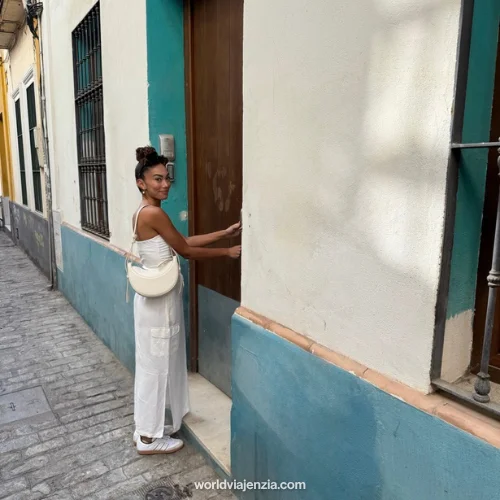
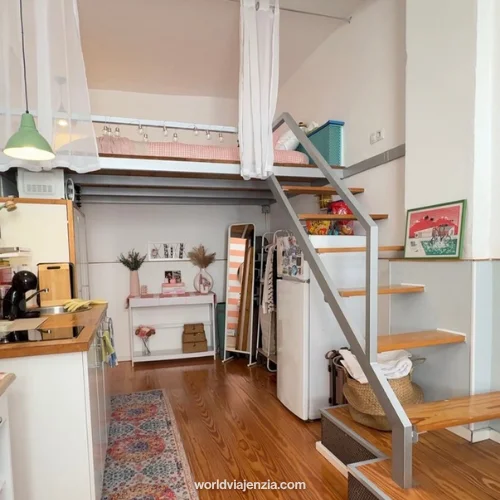
You don’t know where you’ll live before you land, but sometimes it works out in the form of an adorable lofted studio.
Limited Control Over Your Placement
So much of your experience will come down to your placement, schedule, and school coordinator. And in most cases with NALCAP, you don’t get to choose any of these.
Talk to enough auxiliares and you’ll hear wildly different versions of how this goes. Some auxes end up with a three-day work week. Some get laidback coordinators who even let them pick the subjects they’d like to assist in.
I also knew people, myself included, held to standards that looked nothing like “assist the teacher,” with coordinators who do little to address the situation.
This means your entire year can hinge on which of these categories your specific school falls into, and you often won’t know which one you got until you’re already there.
No Help Finding Housing
NALCAP doesn’t help you find housing, and if you run into unexpected costs or housing problems once you’re there, you’re pretty much on your own. This is one of the areas where the program’s support ends right where you need it most.
While I personally lucked out on finding my apartment in Spain, I know auxes who didn’t find permanent housing until nearly three months into the program and drained their savings on temporary solutions. Other friends of mine dealt with all kinds of housing issues: nightmare roommates, mold in their walls, shady landlords, etc.
None of these problems are unique to Spain. But just know there is an added layer of difficulty of having to navigate these issues in a language you may not be fluent in, all while trying to stay afloat at a new job.
Expect to apartment hunt after you arrive: Book 1–2 weeks at an Airbnb, VRBO, or hotel so you can visit places in person before committing. Check out my guide to finding an apartment in Spain to avoid the most common mistakes expats make.
Late Paychecks
I started the program in October and didn’t see my first paycheck until the end of December. I knew other auxiliares who didn’t get paid until February! That’s months of living expenses like rent, groceries, and transportation, all before a single euro from the program showed up.
Late payments are a common issue with NALCAP. So much so, Spain’s Ministry of Education warns you about it themselves. If you don’t have savings to bridge that gap, this alone can make the first few months incredibly stressful, on top of everything else you’re adjusting to. Even with savings on deck, the uncertainty of not knowing when my first paycheck would finally arrive was enough to keep me up some nights.
I’d put this near the top of the list of things I can’t emphasize clearly enough before you commit: budget as if your first paycheck won’t arrive until winter, because for most auxiliares, it doesn’t.
I Got Sicker Than I've Ever Been in My Life
I need to be blunt about this one because I don’t think people talk about it enough: working in Spain can absolutely wreck your immune system during your first few months.
I got sick more times from one semester of teaching English in Spain than I had in the previous five years of my life combined. It was difficult showing up to teach, let alone navigate all of the new responsibilities of life abroad, while regularly hacking up a lung (I couldn’t always take the day off, as NALCAP requires doctor’s approval for every sick day.)
Unfortunately, it wasn’t only the kids’ fault.
Being from New York City, I’ve survived germs that could probably qualify as biological warfare. But even this wasn’t enough to prepare for what I’m about to tell you:
In my specific experience in the south of Spain, many adults seemed to treat the whole concept of covering their mouths when they coughed or sneezed as…optional, apparently.
I say this not to make a sweeping claim about Spain as a whole. I don’t know if this bad habit was a regional thing, a generational one, or just something the people I happened to be surrounded by did often enough to notice.
But combine this with a classroom of tiny plague vectors, and you get exactly the kind of immune system collapse you’d expect. No amount of Emergen-C can stop it.
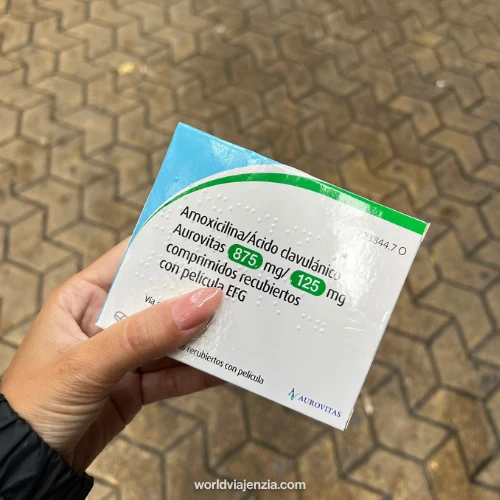

I had more rounds of antibiotics and homemade chicken soup in Spain than I can count.
Slow Spanish Bureaucracy
Spanish government and regional processes move at their own pace, and health insurance was where this hit hardest for me.
As mentioned, I was sick all the time. And like many other auxes, I needed to see a doctor long before our health insurance cards were issued by the program. I ended up paying out of pocket for a virtual doctor’s appointment and a course of antibiotics because I couldn’t physically afford to wait.
Other auxes faced similar delays getting their TIE or a regreso, which prevented them from being able to travel home for the holidays (or anywhere outside of Spain, for that matter).
At best, the pace at which bureaucratic systems move in Spain will be a minor annoyance during your first few months with NALCAP. At worst, this slowness can pose real financial and physical stressors that you can’t quite prepare for before signing up.
🦠 Bring Enough DayQuil to Survive Spain
If there’s one thing to pack extra of, it’s cold and flu medicine. The stress of settling in, foreign germs, and a classroom full of kids will test your immune system like nothing else.
The Ugly: Reasons to Quit NALCAP
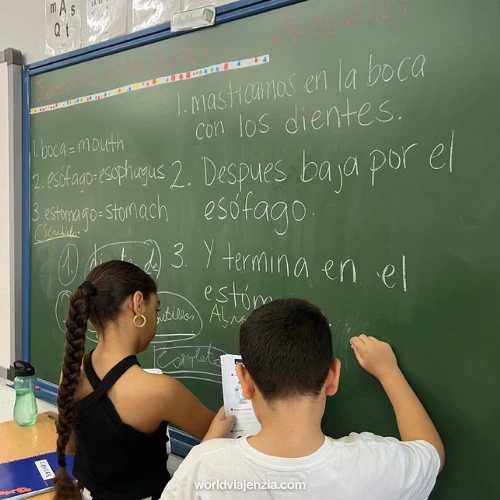
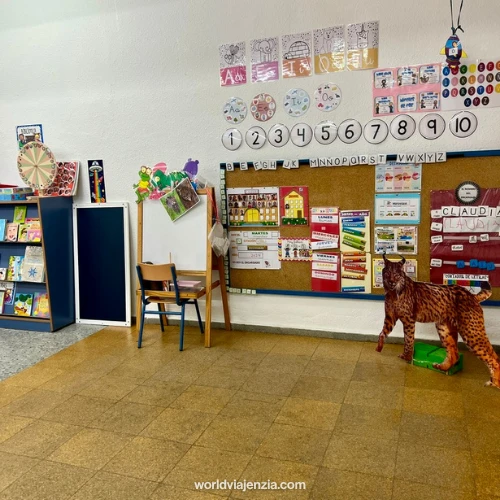
Not legally a teacher, but you’d never know it from the lesson prep.
The Job Description Doesn't Always Match Reality
Your role in NALCAP is as an “auxiliar de conversación.” You are a conversation assistant, not legally a teacher, and Spain’s Ministry of Education has gone out of its way to spell this out in writing.
According to the official government resolution for the 2026-2027 program, auxiliares cannot, under any circumstance, take on duties that belong to teaching staff. Things like:
- Teach a class on your own
- Cover for a teacher who’s out sick
- Write lesson plans
- Grade or prepare tests, quizzes, or essays
- Sit in on staff meetings
- Meet with a student’s parents
- Supervise the playground or cafeteria during breaks
You’re there to help kids practice speaking English, always alongside a real teacher. And yet I regularly found myself fully in charge of a room of children, with no lesson plan except the one I’d prepared myself, while the actual teacher stepped out for a “quick phone call,” “bathroom break,” or a “smoke break” that would last nearly the entire class period.
Looking back, this is the part of my NALCAP experience that concerns me most. I have no legal teaching credentials. I was never trained to run a classroom. The program is designed with protections for all of this in mind, but there will always be schools and teachers that abuse the limits of the auxiliar role anyway.
Of course, plenty of auxiliares have fair, clearly defined placements. But if your experience turns out to be a mismatch between what you were told the role would be and what you are actually asked to do, know that it’s not entirely unheard of in this program.
Being Bilingual Could Work Against You
On this note, NALCAP’s guidelines ask you to speak only English in the classroom to maximize language immersion for students. But this doesn’t always happen in practice.
I’m Latina, and so was the other auxiliar at my school. We both understood and spoke Spanish well, and looking back now, certain teachers took advantage of this in ways that also contradicted NALCAP’s rules. They knew we could function without them translating or participating, so they simply didn’t.
In my experience, it seemed there was an implicit expectation to lead bilingual lessons. My teachers often asked me to introduce new science and history concepts to students in both languages for the first time.
I really wrestled with the fact that my students were still struggling to grasp a subject in their first language, and me layering English on top of that wasn’t exactly setting them up for success.
 Make It Make Sense
I was once chewed out by a teacher for focusing “too much” on English after test scores came back higher on the English portion of an exam compared to the sections in Spanish. Ironically, I was being blamed for succeeding at exactly what I was there to do.
No Recourse When Issues Arise
I went to my coordinator directly about the issues I faced: from teachers leaving me alone in the classroom for extended stretches to the unrealistic expectations I faced as an aux.
Unfortunately, raising my concerns didn’t really change much. If your mentor teacher is the source of these issues, or simply doesn’t care to fix them, there’s very little formal recourse.
Workplace dynamics in Spain can also lean a bit passive aggressive rather than direct in my experience, which made it harder to have a candid conversation about any of my concerns before my placement was already winding down.
There is an added layer to this that auxes should know. In some placements, auxiliares earn close to what full-time local teachers make relative to their hours, and this can create real resentment among your co-workers. It has nothing to do with you personally, but it helps to understand why teachers might try to take advantage of you or ignore your feedback.
The best thing you can do is familiarize yourself with the auxiliar handbook before your first day, and keep it somewhere you can pull it back up if you need to reference it with your classroom teachers or coordinator. NALCAP’s official page on what to expect is a good starting point, and it’s worth checking your specific region’s government site too, since some of the day-to-day details vary by community.
Knowing When to Walk Away
After raising concerns and not seeing much change, I made a decision I don’t see many former auxes talk about openly: I resigned before my placement officially ended.
I’m not usually a quitter, and walking away felt like admitting defeat in a way that still bothers me a little. I cared deeply about the kids, classroom chaos and all. If anything, I held on longer than I should have because of how much I worried about my students and how guilty I felt at the thought of leaving.
But I was losing sleep over how some of the teachers were behaving, and at a certain point, staying started to feel like I was supporting an environment that I didn’t think was all too ethical.
I’d built up some savings before the program, and when I did the math, I realized I had one remaining option: I could afford to walk away from my last paycheck. So I did.
I spent the rest of my time in Spain actually trying to enjoy the country, instead of counting down the hours at a school where I’d already tried, and largely failed, to get the support I needed.
Having that financial cushion didn’t make the decision easy, but it did make it possible, and that’s the part I want to pass along. I highly recommend building up substantial savings before you go. It won’t fix any of the issues above, but it might buy you an option you don’t know you’ll need until you do.
Frequently Asked Questions
Is NALCAP legit?
Yes, NALCAP is a real, government-run program that places assistants in Spanish public schools. That said, the role is legally defined as an assistant, not a teacher, and some schools stretch that definition further than they probably should.
How much does NALCAP pay?
Stipends vary by region. Generally, you will earn 800 or 1,000 euros a month for 14 to 16 hours of work per week. The stipend is meant to cover a modest cost of living, not build savings. Mine, in Sevilla, was enough to get by but not much more.
Do you need teaching experience for NALCAP?
No formal teaching experience or credential is required to apply. You are an assistant, not technically a teacher, and should be supported by a classroom teacher at all times.
According to Spain’s Ministry of Education, auxiliares de conversación do not have a labor relationship with their schools and cannot take on duties that legally belong only to teaching staff.
How competitive is NALCAP to get into?
It varies by year and nationality, but the program is not tiny. A recent call for applications for the 2026-2027 school year opened roughly 750 government-funded placements for foreign conversation assistants, on top of additional positions some regions fund independently.
So, Is NALCAP Worth It?
In my opinion, yes, NALCAP is still worth it — as long as you go in without any illusions.
NALCAP brought me to Sevilla, and Sevilla gave me a period of my life I never knew I could experience.
I’m a first-gen girl from the Bronx, born to Puerto Rican and Dominican parents who have never even traveled internationally. I’m the first in my family to ever have the choice to live abroad. What a gift and privilege it is to say that. In many ways, NALCAP made that possible for me.
But NALCAP also gave me chronic bronchitis, some hard lessons in advocating for myself, and a masterclass in Spanish bureaucracy. I’d be lying if I said any of it was easy, or evenly supported, at every turn. I also want to be clear that this is one person’s experience in one city with one set of teachers, and plenty of auxiliares have had smoother placements than mine.
While I wish my experience at my school went differently, I don’t regret any of it. I wouldn’t be the version of myself I became without working through the hard parts. Plus, I’m a true believer that once you survive NALCAP, you can handle just about anything else life throws your way. Who can say no to that?
🤔NALCAP Isn't For Everyone & That's OK
No one puts this in the eligibility list, but the thing you actually need most is a high tolerance for the unknown. If you can make peace with not knowing exactly what you’re walking into and keep it pushing when things go sideways, you already have a leg up.
If you’re someone who needs structure, clear expectations, and a safety net, now you know what you’re getting yourself into. If you already know how to tolerate uncertainty, advocate for yourself when nobody else will, and find the good even when situations go south, NALCAP can absolutely still be worth it.
For a fuller picture of your options before you commit, start with my guide on how to teach English in Spain and my full NALCAP application guide. I’ve also shared a full breakdown of the best programs to teach English in Spain for anyone weighing NALCAP against the alternatives, because it isn’t the only door in.
Ready to
Move to Spain?
Check Out These Resources
 Book your flight: I always start with Skyscanner to to find the cheapest window to fly. Since you’re moving, make sure to double check baggage allowances — you’ll have more luggage compared to a regular vacation!
 Get covered before you land: I’ve had to use travel insurance more than once, and it saved me thousands each time. SafetyWing covers long-term stays, which matters while you wait on Spanish health insurance.
 Book a short-term place to stay: Do not sign a lease before you land. Booking.com is where I booked my first stay in Sevilla while I searched for an apartment in person.
 Explore once you’re settled: Once the paperwork is done, GetYourGuide is my go-to for exploring your new city and region. They partner with local operators, which matters to me when booking.
 Stay connected when you land: Download Saily before your flight so you have data the moment you touch down. You can use code JENZIA2371 for $5 off your first plan.
 Pack to move, not vacation: A move-specific packing guide is coming soon, but my travel essentials page covers the bare minimum essentials that made it with me to Spain.
Save to Pinterest 📌





2 Responses
Hey Jenzia, this was a thoughtful read. I was an aux for the 2025-2026 academic year and really relate to the things you mentioned here. Sorry about how you were treated and the fact that the teachers weren’t doing their jobs just bc you could speak Spanish… I also left in March instead of completing the programme in June. Nobody ever really talks about leaving! I’m now debating whether to renew or not, since I’m placed in a different region. Reading this made me remember the reality check I had.
Hi Kiara, thanks so much for reading! I’m really glad this resonated with you — even if it means we relate on some unfortunate aspects of the program 😅 You’re so right that leaving isn’t talked about enough! I just hope my POV can help people feel better about the decision, or at least remind them that it’s a perfectly acceptable option.
I’m curious, did you end up renewing in the new region? At least now, you have a better idea than most of what you could expect from the program. Whatever you decided, I hope it feels aligned and a little more on your terms this time around! 🤍